
Buy India's Finest Mridangams
Premium Mridangams Handcrafted One at a Time by Finest Artisans.
Different Sizes in Mridangam
Mridangam is predominantly a South Indian percussion instrument and has it roots in carnatic music. Mridangams come predominantly in 3 sizes:
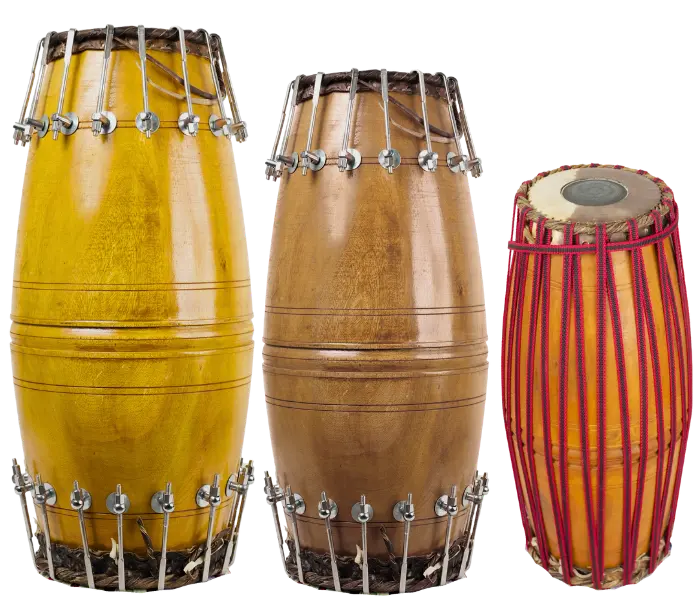
- 24 inches - Ideal for tuning C, C#, D and D# notes. 24" mridangam is ideal for play
- 22 inches - Ideal for tuning F, F#, G notes. 22" mridangam is ideal for playing along with female vocals as accompaniments.
- 18 inches - Ideal for kids starting their music journey (smaller in size, so comfortable to play)
Mechanism to Hold Tension between Mootu & Body of the Mridangam
The left and right heads of the mridangam are connected with the body of the mridangam using two mechanism:
- Nut & Bolt
- Vaar (Strap)
Straps or Vaar Type Mridangam
Vaar (Strap) is used to hold the tension between the mootu and the body of the drums. The straps traditionally were made with leather (buffalo skin) as they are tough and can hold tension relatively for a long period of time.
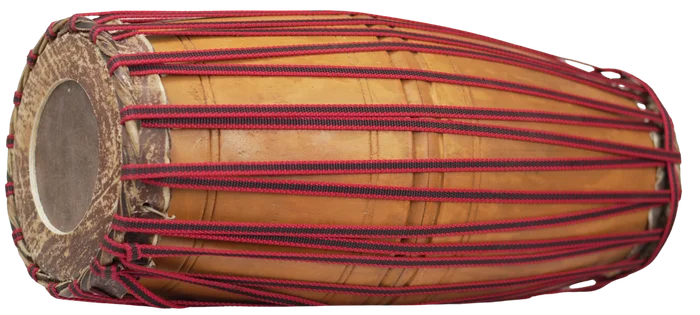
Nylon Strap Mridangam
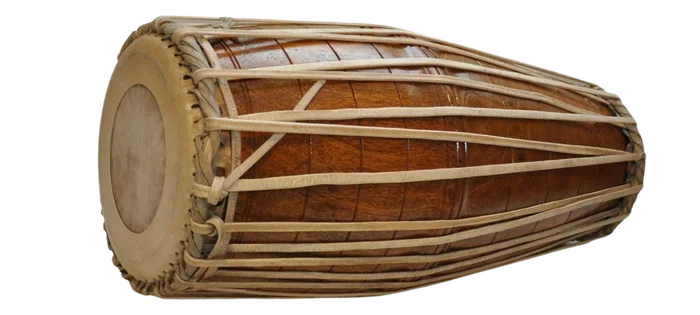
Leather Strap Mridangam
Now a days nylon straps / ropes are used instead of leather strap, which are relatively more stable and can be changed easily.
Nut and Bolt Mridangam
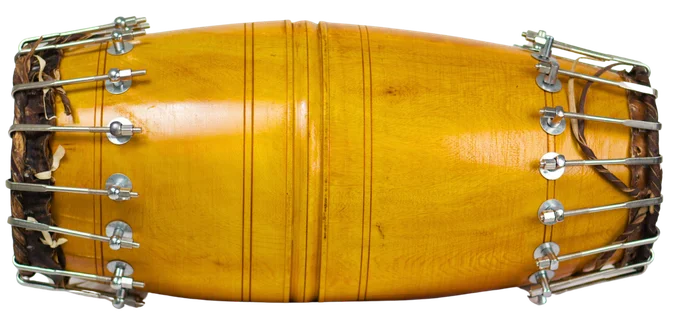
Nut and bolt is used to hold the thattu. Basically the nut & bolt is used for adjusting the scales. The point where the bolt and nut meets is called as Kannu (Eye). The traditional ones come with 16 Kannus, you can customise to 12 kannus also.
Nut & Bolt Vs Strap Mridangam
A strap mridangam can generally be tuned only from half to one note up or down. So for example if the mridangam is tuned to C scale / kattai, it can be tuned up to C#, D or tuned down B, A# scale / kattai.
However a nut & bolt mridangam can be tuned to many notes up or down. So this way a mridangam player need not carry many mridangams particularly while playing live shows.
Why Shop Mridangams from Music Master?
Making authentic traditional Indian musical instruments like mridangam, veena, flutes etc. is product of knowledge transfer by generations, acquiring skills over years , carefully selected natural materials and attention to details.
Whether you are looking for a mridangam for practice, learning, live performance, concerts or studio recording, our mridangams are carefully selected for their rich nadham, tonal balance, finest quality materials.
We have done all the heavy lifting — finding, evaluating and selecting quality mridangams, so you can focus on what you love – learning, practising and playing mridangam.
100% Quality Check
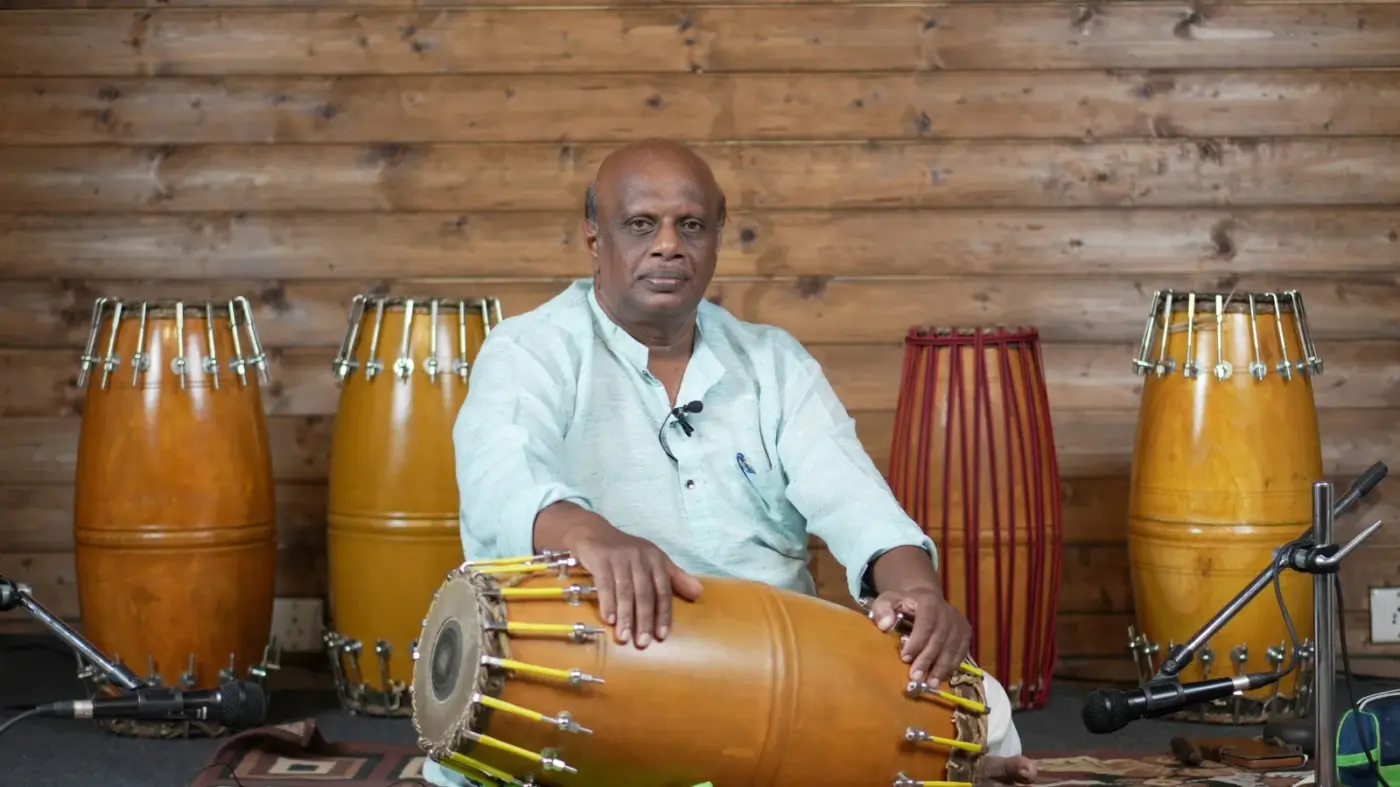
At Music Master we sell only the best quality mridangams made by experienced artisans. All our mridangams are 100% quality checked before a customer can buy in our shop or despatched to our online customers. This quality check is done by our in-house mridangam specialists.
Authentic Handmade Carnatic Mridangams by Finest Artisans

We carefully handpick the finest artisans for each Indian musical instrument, ensuring our customers receive exceptional instruments crafted to meet the standards of professional musicians and accomplished gurus.
Mr. Elumalai, a second-generation mridangam maker, brings over 40 years of experience and craftsmanship to the art of making traditional Carnatic mridangams and percussion instruments. He has his garage in Panruti, Tamil Nadu. Currently we sell only his mridangams.
Quality Materials, Traditional Craftsmanship
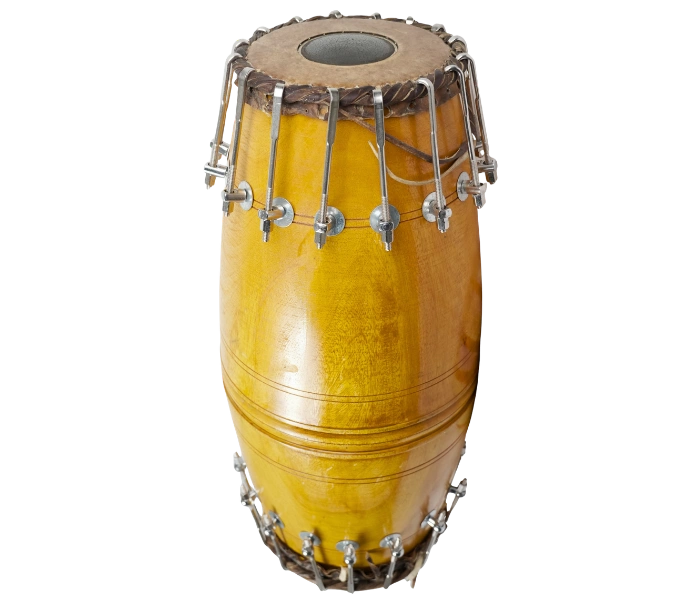
A good mridangam begins with raw materials. The main body or the hood of the mridangam is made using jack fruit wood, known for its acoustic properties and is naturally pest resistant. The jackfruit wood is sourced from Panruti, Tamil Nadu. Mr. Ezhumalai personally shortlists the jackfruit trees from mature trees.
The wood is then cut and undergoes careful seasoning. The drum heads are made using carefully selected cow, buffalo and goat hides. Selecting the right leather and preparing it correctly is essential for achieving good tonal characteristics.
Every stage—from wood selection and seasoning, leather, preparation, making the mootu and fixing the mootu/ left & right head and building the right tension using nut & blot / strap mechansim contributes to the sound and playing experience of the finished instrument. All these need specific skills that has to be acquired over many years.
Super Premium Custom Mridangams
For professionals and players looking for very high quality and super premium mridangams, we also undertake custom made mridangams specially or made to order based on time availability of artisan.
We scout for exceptionally old jackfruit and other high quality wood from traditional houses in parts of Tamil Nadu & Kerala. Some of this reclaimed timber are 150+ years old. These rare wood can be used to make mridangams, which can last for generations and has a distinctive feel & tone when you play. We can also customise these mridangams – number of kannus in nut & bolt (12 or 16) or vaar/ strap type mridangam.
Buy Mridangams Online With Confidence
You can buy mridangam online in case you are not able to come to our store in pallikaranai. The process is simple, just call or whatsapp ‘Mridangam to 9789897600 and we will be happy to call and understand your requirements and send you all the relevant details to you.
You can also shop from our online catalogue. Each mridangam is unique. We regularly update our catalogue in our website in its colour, wood grain, both left and right head with high resolution original pictures of the mridangam. You can whatsapp us to get more details of the mridangam price, so that you can shop online mridangam with ease and confidence.
We can ship mridangam safely across India and international locations. (For international locations, India Post is our preferred shipping partner. Shipping charges and international customs duty will apply)

1.Whatsapp ‘Mridangam’
Whatsapp ‘Mridangam’ to 9789897600. We will send you a professional photograph and video of the mridangam that you will receive.


2. Place Order
Select all the scales you want and pay us. We accept all International currency.

3. Shipping
Free Shipping all over India. Courier charges apply to all international locations.
Explore Our Catalogue
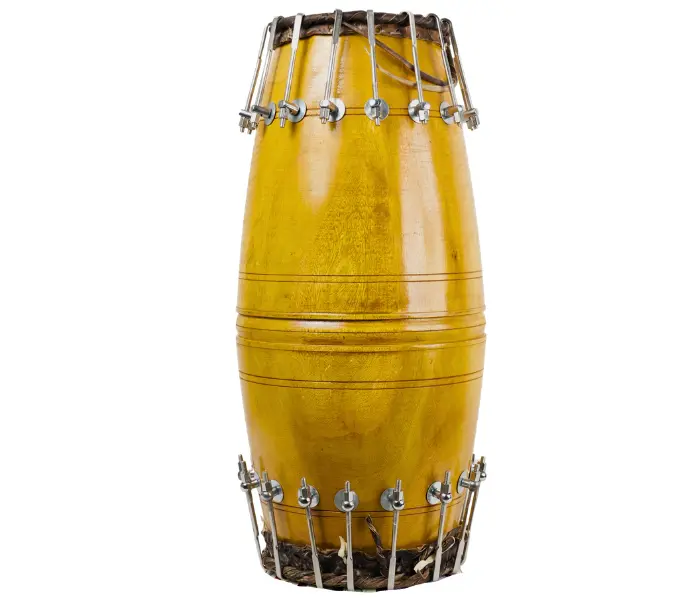
Tuning a Mridangam - A Special Skill
Learning to tune a mridangam is an essential skill, as the mridangam has to be tuned based on singer’s pitch. It will be an elaborate process in the beginning, but over time one should be able to perfect and get the mridangam relatively in a short period of time.
The entire surface area of each head should always have same pitch. However due to regular playing, room temperature etc. the tuning will get unsettled and each time the mridangam player has to make sure that the tuning is set to the scale s/he has to play.
Even when you are playing alone it is advised that you tune to a particular kattai/scale so that over a period of time, you are able to tell the kattai or scale just by listening to the sound. Each side of the mridangam has to be tuned before playing.
Mridangam is tuned by adjusting the tension of the leather strap or nut and bolt with help of wooden block & stone/hammer.
Tuning the Right Head (Valan thalai)
The right-hand head can be tuned to suit the shruti (pitch) of the accompanying vocalist or the lead instrument. This is one of the fascinating features that makes the mridangam different from many other traditional drums.
The instrument is kept flat on end head and the wooden peg are adjusted by hitting it with a stone to set the pitch. The wooden peg is kept above the specific spot at the rim where the pitch should be increased. To go down the the pitch the same method will be followed below the rim.
Tuning the Left Head (Edan thalai)
The left side can produces a bass sound or the low frequencies. Tuning is done using a mixture of semolina and water and applying the mixture in the centre of left head. The Meetu and Chappu notes should be tuned the same note.
The mridangam’s pitch can be matched using a shruti box or tanpura (if you are using ears to tune) or chromatic tuner (preferred by beginners).
For female singers: 5, 5.5 or 6 (G, G# or A note)
For male singers: 1, 1.5 or 2 Shruti (C, C# or D note)
Mridangam Tuning Kit
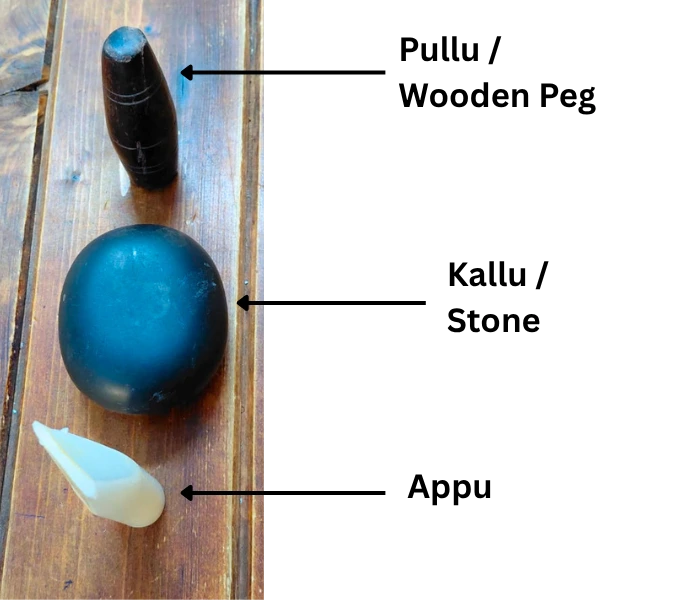
3 tools are used for tuning – Pullu (wooden peg), kallu (special stone) and Appu (acrylic piece).
Kallu (Stone): Kallu is spherical smooth special stone that can be used to hit the appu & top of mootu to the tune the right side or Elan thalai. These stones can be obtained only from specific locations in India.
Pullu: The pullu or wooden peg sometimes a hard synthic piece is a special shaped piece used is hit on right side below the mootu to tune the right side to rise the pitch.
Aapu: A special wooden piece used for tuning the left side of the mridangam to fine tune the bass notes.
Special Paste on Right Side:
A paste made up of rawa (semolina) and water is applied on centre of the right side or Edan thalai. You can use water to reduce the pitch. Alternatively readymade Clay is also available that can also be used instead of rawa & water paste.
Anatomy of Mridangam
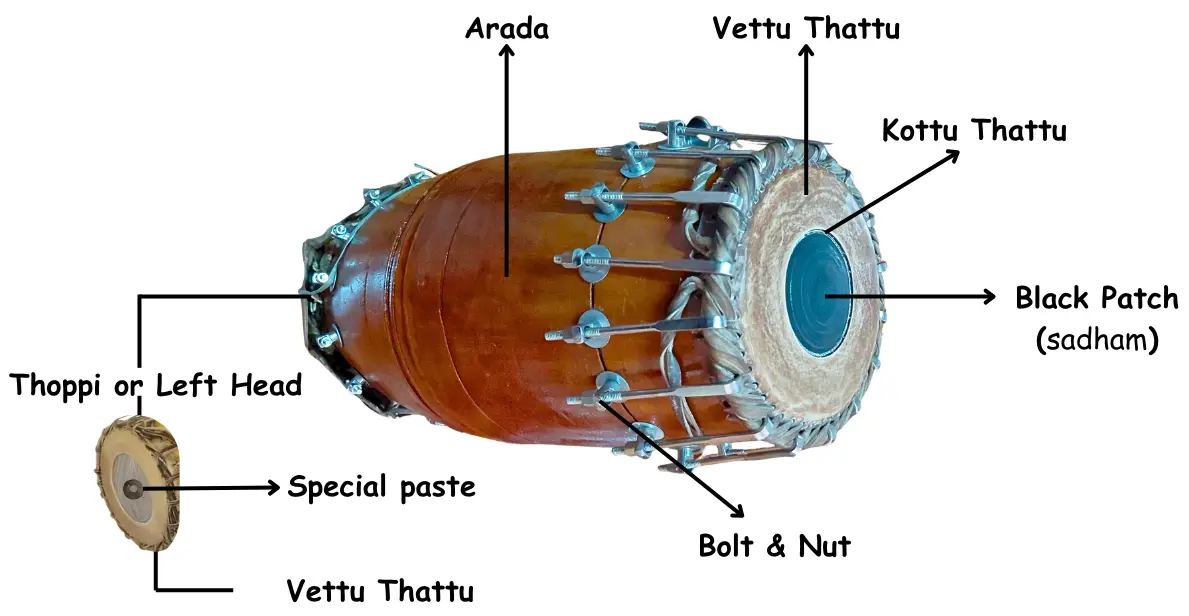
The Body of Mridangam
The hollow wooden shell is generally carved from a single piece of Jackfruit wood from specific locations of Tamil Nadu (Panruti) & Kerala. While Jackfruit trees can grow in both wet and dry climates, Panruti is ideal choice as it almost dry and hot throug out the year and the ‘seasoned dry’ jackfruit wood gives the ideal sound unlike jackfruit trees that grows in wet climate.
Sometimes seasoned artisans source wood from beams of traditional old houses, which are made from teak wood also. They are rare and these mridangams are expensive
The carved centre piece is in barrel shape and looks beautiful naturally, and a slight coat of glossy paint makes it look even more beautiful.
Types of Mridangam
There are two types of mridangam – Kuchi & Kappi. Two mridangam with same size and material may be same, but the overall tonal sound quality will be different between kuchi and kappi mridangams. Say two differnet voices, you got to hear to understand the difference.
Kuchi Mridangam
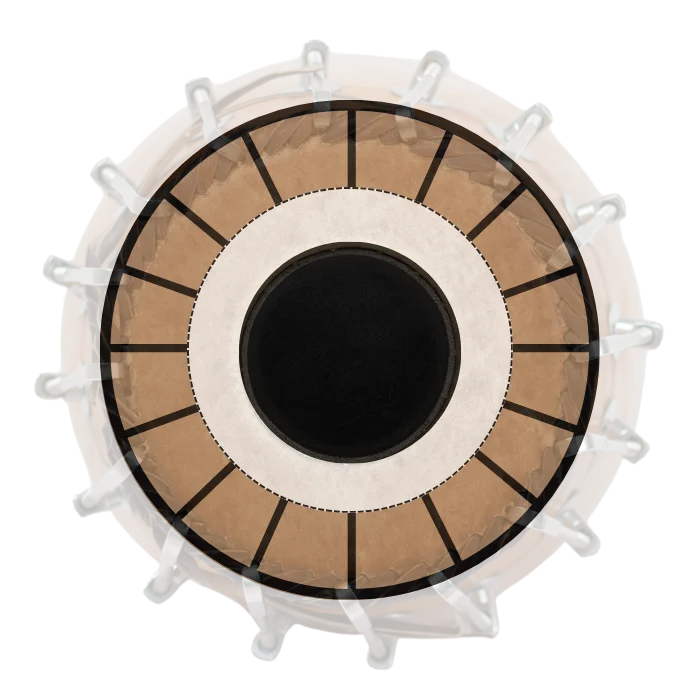
The word ‘Kuchi’ simply means stick in Tamil & Telugu. So a Kuchi is used between the outer and middle membrane. 16 sticks made of pine, palm, bamboo or reed is used like that of a cycle spoke wheel between the two membranes.
Due to this when the mridangam is hit there is a distinct tonal character in the sound.
Kuchi Mridangam
The word ‘Kuchi’ simply means stick in Tamil & Telugu. So a Kuchi is used between the outer and middle membrane. 16 sticks made of pine, palm, bamboo or reed is used like that of a cycle spoke wheel between the two membranes.
Due to this when the mridangam is hit there is a distinct tonal character in the sound.
Kappi Mridangam
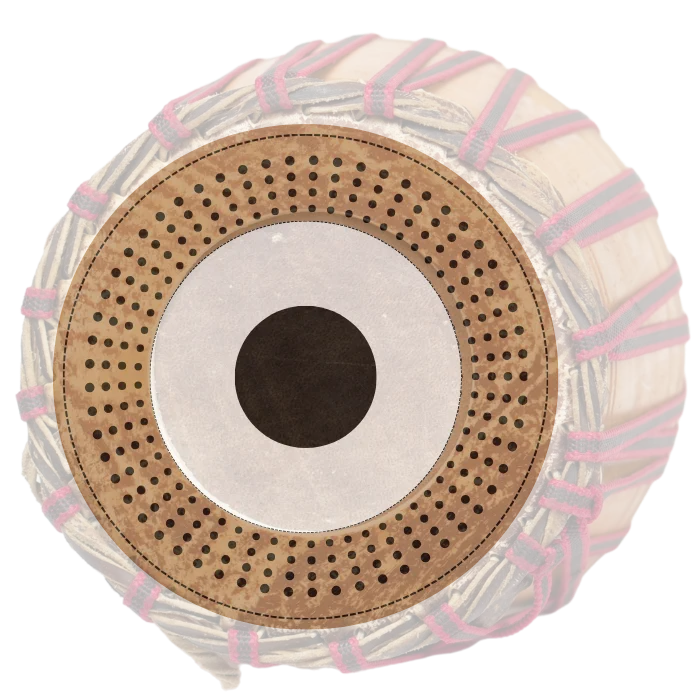
In Kappi mridangam there is no sticks. Instead a special powder or fine small piece of stones is made from same materials that is used to make karnai.
Therefore a kappi mridangam has different tonal character.
Kappi Mridangam
In Kappi mridangam there is no sticks. Instead a special powder or fine small piece of stones is made from same materials that is used to make karnai.
Therefore a kappi mridangam has different tonal character.
Difference between Kuchi and Kappi Mridangam
Based on research done by legendary mridangam player Dr. Umayalpuram Sivaraman and scientists from IIT, the chapu strokes ring longer and stronger in Kuchi Mridangam, while ‘dheem’ and ‘nam’ notes come out fuller in kappi mridangam.
The Right Head (aka Karanai, Valanthalai)
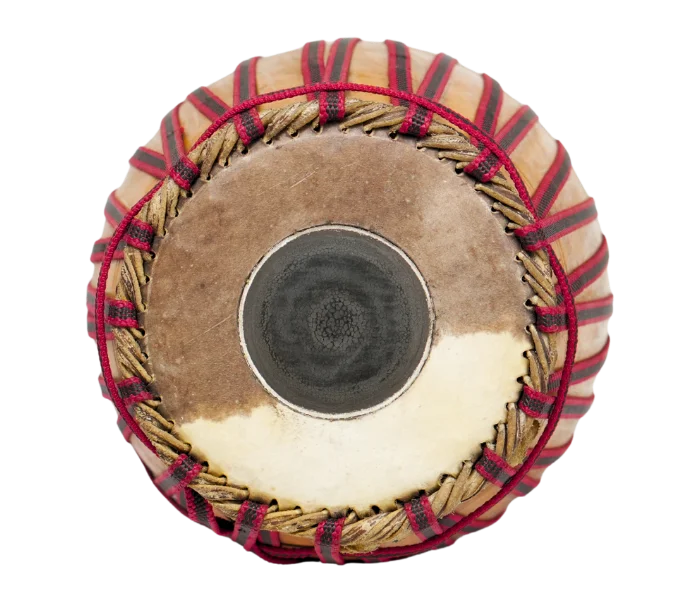
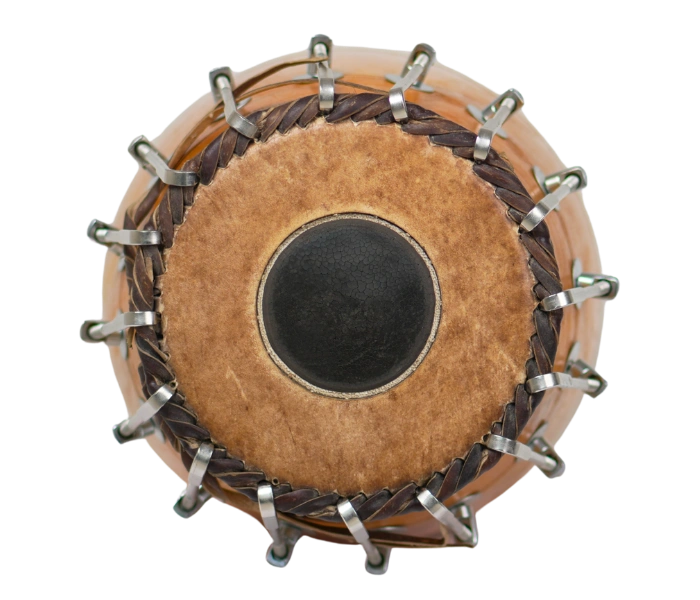
The right head referred to as Valanthalai. The diameter of right side is smaller than the left side. The overall right side membrane has three layers of leather. The leathers are made of Goat and Cow skin.
- Vettu Thatu : The top-most visible layer is made of calf-hide.
- Kottu Thatu : The middle layer is made of goat skin and it is partially visible. (This is the layer that carries the black circle (Karnai). This is layer that gives ‘nadham’ of the mridangam.
- Utkara Thatu : The inner most layer is made from buffalo skin and is not visible.
The Black Patch on the Right Head
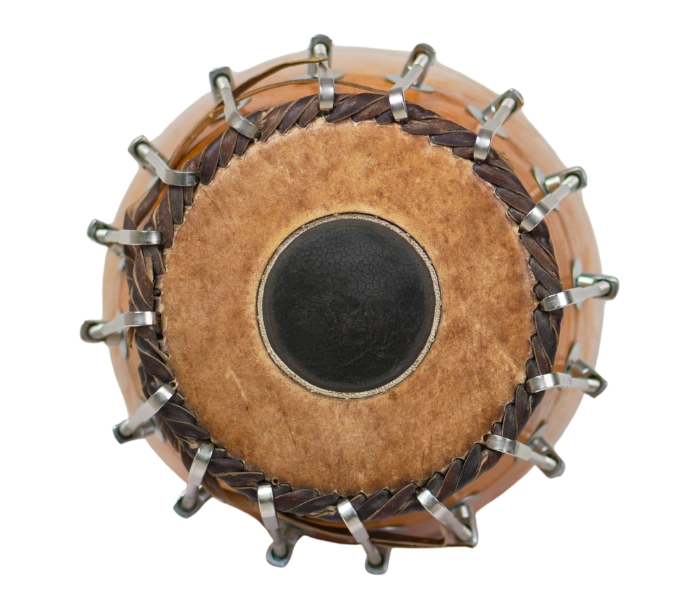
One important part of the mridangam instrument, is the black patch on the right head called as karnai, which plays an important part in its ‘tonal’ quality.
The black patch is handmade by grounding nice a specific kind of stone that is available in Thanjavur (lava stone, which contains traces of manganes, ferric oxide etc.) and is mixed with cooked rice to form a paste and is applied in the centre, layer by layer.
The small ring area visible around black spot is the skin underlying the top visible skin or middle layer. So effectively the black patch is on the top of the middle layer. This lets a metallic sound to be produced called as Chapu.
Each layer is allowed to dry before applying the next layer, and this process goes many times before the ideal black patch if got. During the process of drying cracks may appear as moisture evaporates and this is a natural process.
The Black Patch on the Right Head
One important part of the mridangam instrument, is the black patch on the right head called as karnai, which plays an important part in its ‘tonal’ quality.
The black patch is handmade by grounding nice a specific kind of stone that is available in Thanjavur (lava stone, which contains traces of manganes, ferric oxide etc.) and is mixed with cooked rice to form a paste and is applied in the centre, layer by layer.
The small ring area visible around black spot is the skin underlying the top visible skin or middle layer. So effectively the black patch is on the top of the middle layer. This lets a metallic sound to be produced called as Chapu.
Each layer is allowed to dry before applying the next layer, and this process goes many times before the ideal black patch if got. During the process of drying cracks may appear as moisture evaporates and this is a natural process.
The Left Head (aka Thoppi, Edanthalai)
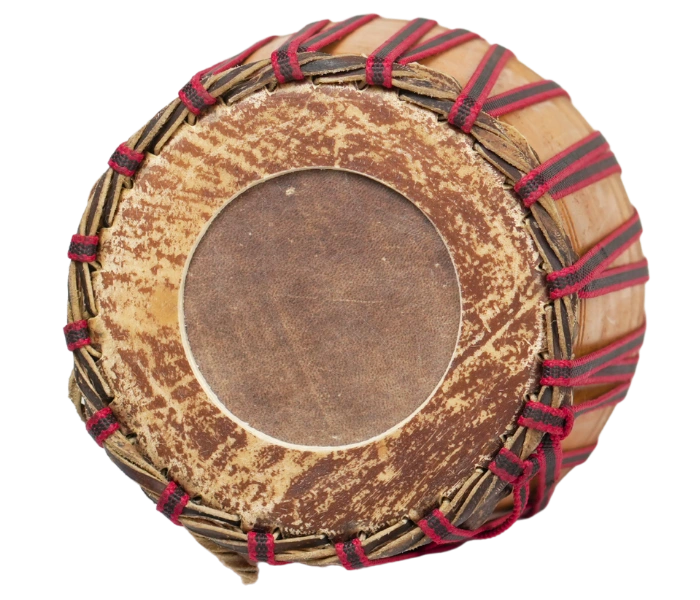
This side produces the bass sound – ‘thom’. The left side membrane also has three layers again. The leathers are made of buffalo and goat skin. The outer layer has two layers of buffalo skin, one beneath the other with the hollow centre and the second layer is not visible. The third layer which is visible at the centre of head is goat skin.
The main difference is the karanai or the black spot is missing. Sometimes a small karnai can be introduced to get a special sound called ‘Ghumki’. If the ghumki is missing a special clay or paste of rava & water has to be applied to get the sound. Sometimes a plumber’s putty also used.
The Left Head (aka Thoppi, Edanthalai)
This side produces the bass sound – ‘thom’. The left side membrane also has three layers again. The leathers are made of buffalo and goat skin. The outer layer has two layers of buffalo skin, one beneath the other with the hollow centre and the second layer is not visible. The third layer which is visible at the centre of head is goat skin.
The main difference is the karanai or the black spot is missing. Sometimes a small karnai can be introduced to get a special sound called ‘Ghumki’. If the ghumki is missing a special clay or paste of rava & water has to be applied to get the sound. Sometimes a plumber’s putty also used.
Mootu
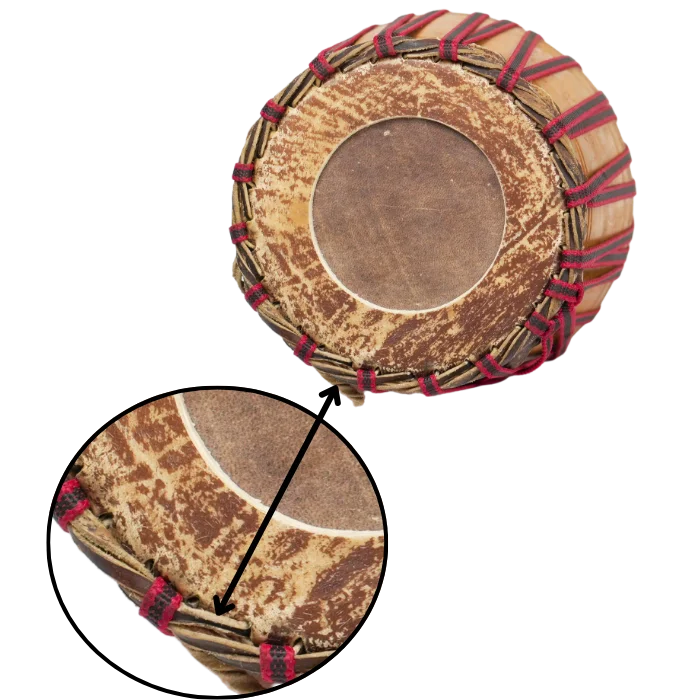
Mootu is the set of leather straps on both side or the leather strip on the periphery of the left and right head holds the tension of the thattu with with the nut and bolt or straps. Mootu has to be maintained properly so that tuning stays perfect. Mootu is made of ox or buffalo skin.
Vaar (Strap) & Nut & Bolt Mechanism
The mootu is on left and right sides are attached to the body using two mechanism. This is important as this builds the tension between the left & right head with body and key factor in tuning of mridangam.
Vaar (Strap) Mechansim
In olden days, leather straps where used to hold the mootu with body of the mridangam. But these days nylon straps are more widely used. You have to specially request if you want to make leather straps from your mridangam maker.
Nut & Bolt Mechansim
Instead of leather, nut and bolt mechanism is used to hold the mootu with body of the mridangam.